

An electric car polisher removes paint imperfections, swirl marks, and oxidation while restoring gloss to vehicle surfaces. These powered tools work faster and more consistently than manual methods, delivering professional detailing results without hiring specialists. This guide examines different electric car polisher types, compares popular models, and explains how to select the right tool for your vehicle care needs.
Table of Contents
What Is an Electric Car Polisher?
An electric car polisher is a motorized tool that applies polishing compounds to automotive paint through mechanical movement patterns. Unlike hand polishing that relies on arm strength and endurance, electric polishers maintain consistent pressure and speed throughout the polishing process. This consistency produces uniform results across entire vehicle panels.
Core components include:
- Electric motor (corded or battery-powered)
- Backing plate for pad attachment
- Variable speed controls
- Polishing pad attachment system
- Ergonomic handles and grips
The primary purpose involves paint correction through controlled abrasion. Polishing compounds contain microscopic abrasive particles that remove thin clear coat layers, eliminating surface defects in the process. The electric polisher distributes these compounds evenly while the pad movement creates friction that enables correction.
Three main movement patterns distinguish polisher types. Rotary polishers spin in a single direction, dual action models use random orbital motion, and traditional orbital polishers oscillate without rotation. Each pattern serves different correction needs and skill requirements.
Paint correction addresses various common issues. Swirl marks appear as fine scratches visible under direct lighting, typically caused by improper washing techniques. Oxidation creates dull, chalky surfaces on neglected paint. Light scratches from branches, car washes, or environmental contact mar otherwise smooth finishes. Water spots etch into clear coat if left untreated. Electric polishers tackle these problems by removing damaged clear coat layers and revealing fresh paint beneath.
The tool selection impacts both safety and effectiveness. Beginners benefit from forgiving machines with safety features preventing paint damage. Experienced users might prefer aggressive tools enabling faster correction on severely damaged surfaces. Understanding these differences prevents choosing inappropriate equipment for skill level or task requirements.
Modern electric car polishers evolved from industrial equipment originally designed for wood finishing and metal fabrication. The Porter Cable dual action sander transitioned from construction use to automotive detailing, revolutionizing paint correction accessibility. This crossover made professional-quality paint correction available beyond specialized body shops.
How Electric Car Polishers Work
Electric car polishers operate through motorized pad movement combined with polishing compounds that contain controlled abrasives. The basic principle involves removing microscopic clear coat layers to eliminate surface imperfections while creating uniform reflective properties.
Standard operational process:
- Clean vehicle surface thoroughly removing dirt and contaminants
- Apply small amount of polishing compound to pad
- Spread compound across work area at low speed
- Increase to working speed maintaining consistent pressure
- Work in overlapping passes covering entire panel section
- Wipe away residue and inspect results under proper lighting
- Repeat process with finer compounds for final refinement
The motor drives movement through different mechanisms depending on polisher type. Rotary polishers use forced rotation only, while dual action models combine rotation with oscillation. This dual movement pattern reduces heat buildup and provides more forgiving operation for users without extensive experience.
Variable speed controls allow matching pad speed to specific tasks. Lower speeds suit spreading compounds and working near edges where control matters most. Higher speeds enable faster cutting action for heavy correction work. Most quality polishers offer six to eight speed settings providing flexibility across different polishing stages and paint conditions.
Backing plates connect pads to the polisher spindle. These circular platforms come in various sizes, typically ranging from three to six inches diameter. Larger backing plates cover more surface area per pass but prove difficult maneuvering around curves, mirrors, and trim. Smaller plates provide precision for detailed work and tight spaces. Hook-and-loop systems enable quick pad changes without tools.
Polishing pads determine aggressiveness and finish quality. Foam pads with different firmness levels match various correction stages, from cutting through heavy defects to final finishing for maximum gloss. Wool pads offer aggressive cutting for severely damaged paint. Microfiber pads balance cutting power with finishing capability. Pad selection impacts results as significantly as polisher choice.
Heat generation represents a critical factor during polishing. Friction between pad, compound, and paint creates temperature increases softening clear coat. This softening enables correction but excessive heat risks burning through protective layers. Dual action polishers generate less heat through their random orbital motion compared to rotary models, providing built-in protection against thermal damage.
Proper technique involves keeping the polisher moving constantly across surfaces. Dwelling too long in one spot concentrates heat and increases burn-through risk. Maintaining flat pad contact prevents edge catching and potential paint damage. Applying moderate pressure allows the compound and pad to perform the work rather than forcing aggressive action. These fundamentals apply regardless of specific polisher type.
Corded models provide continuous power without runtime limitations. Battery-powered versions offer portability and eliminate cord management challenges. Professional detailers typically prefer corded reliability for all-day use. Enthusiasts often select cordless convenience for occasional detailing sessions. Both power sources deliver comparable performance when using quality equipment.
Electric Car Polisher Provider Comparison
Different brands emphasize distinct qualities in their electric car polisher offerings. Understanding these specializations helps match tools to specific requirements and preferences.
| Brand | Popular Model | Key Features | Ideal For |
|---|---|---|---|
| Porter Cable | 7424XP | Dual action, 4.5 amp motor, variable speed, proven reliability | Beginners, general paint correction |
| Meguiar’s | MT300 | Dual action, 7 amp motor, digital speed control, ergonomic design | Intermediate users, frequent detailing |
| Griot’s Garage | G9 | Long-throw dual action, powerful motor, smooth operation | Enthusiasts wanting faster correction |
| DeWalt | DWP849X | Rotary polisher, 12 amp motor, professional grade, aggressive cutting | Experienced detailers, heavy correction |
| Rupes | BigFoot 21 | Long-throw random orbital, 21mm throw, Italian engineering | Professionals, premium performance |
| Chemical Guys | TORQX | Random orbital, affordable entry option, complete kits available | Budget-conscious beginners |
| Harbor Freight | Bauer | Dual action, budget-friendly, basic functionality | Cost-sensitive users, testing interest |
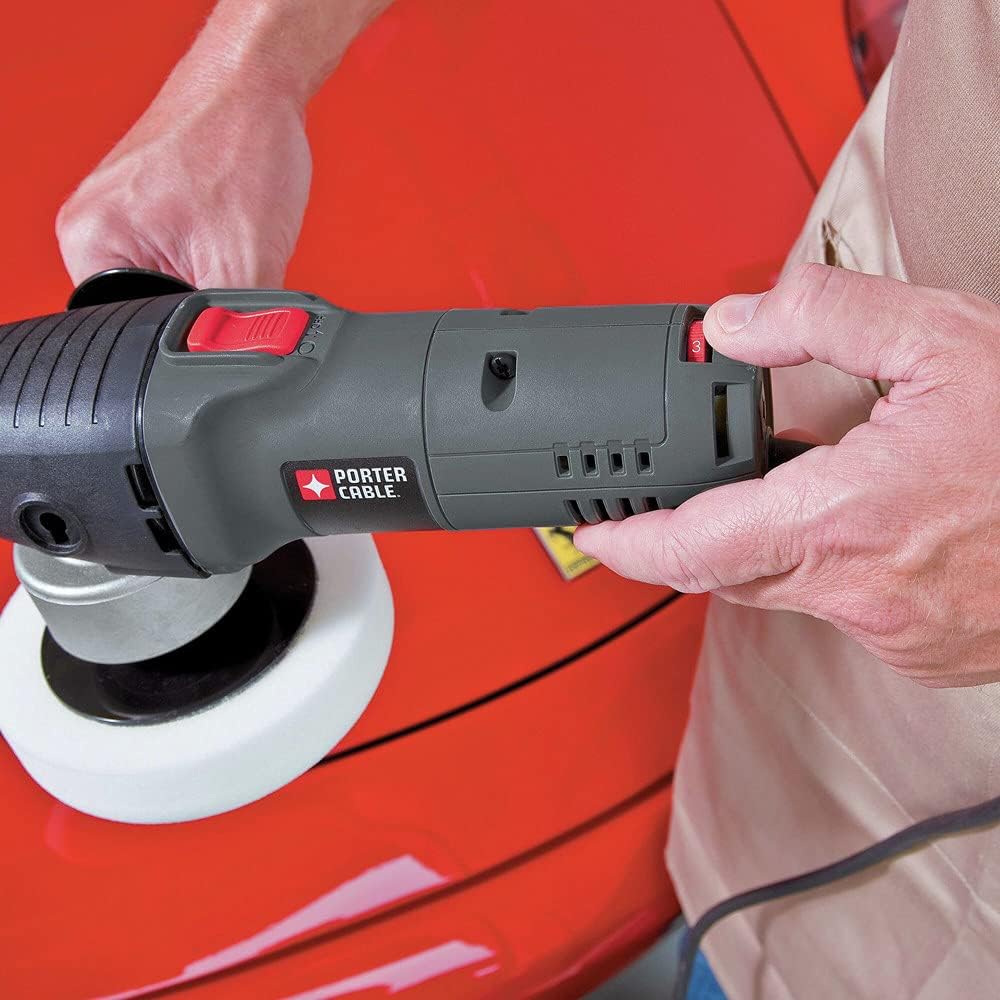
Porter Cable established the dual action polisher category for automotive use. Their 7424XP model remains popular due to proven reliability and extensive accessory compatibility. The Porter Cable 7424XP continues as the most popular polisher among enthusiasts and professionals, benefiting from widespread pad and backing plate availability. The moderate power level suits beginners while providing sufficient capability for significant paint correction.
Meguiar’s leverages decades of car care product expertise in their polisher designs. The MT300 features enhanced power output compared to earlier models while maintaining user-friendly operation. Digital speed readouts eliminate guesswork about pad speed. Soft-touch housings reduce vibration transmission to hands during extended use. The company bundles polishers with their proprietary compounds creating complete systems.
Griot’s Garage targets enthusiast detailers seeking performance upgrades over entry-level tools. Their long-throw dual action polishers cover more surface area per orbit, reducing time requirements for full vehicle correction. Heavier counterweights create smoother operation compared to budget alternatives. Premium pricing reflects refined manufacturing tolerances and comprehensive warranty coverage.
DeWalt applies power tool expertise to automotive polishers. Their rotary models provide professional-grade capability for experienced users comfortable with aggressive correction tools. The DeWalt 849 represents professional circular polisher capability for complete swirl and scratch removal. Heavy-duty construction withstands commercial detailing demands. However, the aggressive nature requires skill preventing paint damage.
Rupes manufactures premium polishing equipment emphasizing smooth operation and advanced features. Italian engineering produces refined tools with minimal vibration. The BigFoot line offers various throw lengths accommodating different correction needs and panel sizes. Professional detailers justify higher costs through superior reliability and finish quality. The random orbital movement pattern balances correction ability with safe operation.
Chemical Guys positions products as accessible entry points for detailing hobbyists. Complete kits include polisher, pads, compounds, and accessories eliminating separate component purchases. Lower pricing makes trying machine polishing affordable without significant investment. Performance matches casual use requirements though serious enthusiasts often upgrade after developing skills and preferences.
Harbor Freight provides budget options enabling experimentation without premium pricing. The Bauer dual action polisher functions adequately for occasional use despite rougher operation than refined competitors. The Harbor Freight dual action polisher works functionally identical to Porter Cable models using the same backing plates, pads, and compounds. Limited warranties reflect value positioning but represent minimal risk for testing polishing interest.
Benefits of Electric Car Polishers
Time efficiency compared to hand methods
Manual polishing requires hours of repetitive circular motions to achieve results matching minutes of machine work. A complete vehicle hand polish might consume an entire day. Electric polishers accomplish the same correction in two to four hours depending on paint condition. This efficiency makes regular paint maintenance realistic for busy vehicle owners.
Consistent pressure and movement patterns
Human endurance varies throughout polishing sessions. Arms tire, pressure decreases, and motion patterns become inconsistent. Electric polishers maintain uniform action regardless of work duration. This consistency produces even results across all panels rather than varying quality based on physical fatigue.
Superior correction of moderate to heavy defects
Light imperfections respond to hand polishing, but significant swirls, scratches, and oxidation require machine assistance. The sustained mechanical action cuts through damaged clear coat layers hand methods cannot effectively address. Paint that appears beyond saving often responds dramatically to proper machine polishing.
Professional-quality results without professional costs
Mobile detailing services charge several hundred dollars for paint correction. Quality electric polishers cost similar amounts as single-use professional services but provide unlimited future corrections. Vehicle owners recoup investments after two or three detailing sessions while gaining skills and satisfaction from personal work.
Paint protection through regular maintenance
Properly polished paint accepts sealants and coatings more effectively than neglected surfaces. Regular light polishing removes contaminants before they cause permanent damage. This preventive approach maintains paint condition rather than waiting for restoration needs. Well-maintained paint retains better resale value and requires less intensive correction over vehicle ownership.
Skill development and detailing knowledge
Operating electric polishers teaches paint structure, compound selection, pad matching, and correction techniques. This knowledge transfers to understanding professional detailing, making informed service purchases, and recognizing quality work. Enthusiasts often discover unexpected satisfaction in the craft aspects beyond simple vehicle maintenance.
Versatility across multiple vehicles
Polisher investments serve entire household vehicle fleets plus boats, recreational vehicles, motorcycles, and more. The same tool and techniques apply across different automotive paint systems. Family members, friends, and neighbors often request assistance once results become visible, expanding value beyond personal use.
Drawbacks and Considerations
Learning curve and practice requirements
Effective polishing demands understanding paint thickness, compound aggressiveness, pad selection, and technique refinement. Rotary buffer success requires skill and experience, with improper use risking paint burn-through requiring new paint jobs. Beginners should practice on inconspicuous panels or scrap parts before attempting visible surfaces. Expect initial results falling short of expectations while developing proficiency.
Risk of paint damage from improper technique
Excessive pressure, wrong compound selection, dwelling too long in spots, or using aggressive tools without experience causes clear coat burn-through. This permanent damage requires professional repainting costing significantly more than original correction attempts. Safety-oriented dual action polishers reduce but don’t eliminate damage possibilities. Proper education and cautious practice prevent expensive mistakes.
Initial equipment investment costs
Quality electric car polishers, backing plates, pad assortments, compounds, and accessories represent several hundred dollar investments. Budget options exist but might frustrate through poor performance or premature failure. Serious paint correction requires this upfront commitment before seeing results. Casual users might not justify costs for infrequent use.
Physical demands during extended sessions
Despite powered assistance, holding and maneuvering polishers for hours causes arm, shoulder, and back fatigue. Vehicle roofs, hoods, and large SUV panels challenge endurance. Proper ergonomics, frequent breaks, and realistic time expectations prevent exhaustion and rushed mistakes. Some users find cordless battery weights exacerbate fatigue compared to lighter corded alternatives.
Noise levels during operation
Electric motors and pad movement generate significant sound levels potentially bothering neighbors or household members. Garage work confines noise somewhat but outdoor detailing broadcasts widely. Early morning or late evening sessions risk complaints. Hearing protection becomes advisable during all-day correction projects involving multiple vehicles.
Compound mess and cleanup requirements
Polishing compounds splatter onto surrounding surfaces, trim, wheels, and ground. Dried compound residue proves difficult removing from porous materials. Masking tape and plastic sheeting protect adjacent areas but add preparation time. Post-polishing cleanup sometimes rivals actual polishing duration. Work areas require dedicated detailing spaces or tolerance for temporary mess.
Consumable costs over time
Pads wear through repeated use and washing, requiring periodic replacement. Various correction stages demand different pad types multiplying inventory needs. Polishing compounds, cleaners, sealants, and other consumables create ongoing expenses. Serious enthusiasts accumulate significant product collections. These recurring costs exceed initial tool purchases over years of regular detailing.
Pricing Overview
Electric car polisher costs vary significantly based on type, brand reputation, included accessories, and performance capabilities.
Budget entry-level options start around $50-100 for basic dual action polishers from Harbor Freight, Chemical Guys, or lesser-known brands. These serve users testing interest before committing to premium equipment. Functionality covers light correction and wax application but lacks refinement and durability of established brands. Adequate for occasional detailing with modest expectations.
Mid-range quality tools occupy the $150-250 range including Porter Cable 7424XP, Meguiar’s MT300, and similar proven models. This category represents sweet spot for enthusiast detailers balancing capability with affordability. These polishers handle regular paint correction, withstand years of home use, and support extensive accessory ecosystems. Most buyers find this tier satisfies needs without unnecessary premium costs.
Premium professional equipment ranges from $300-600 covering Rupes BigFoot series, Griot’s Garage high-end models, and specialized professional tools. Enhanced motors, tighter manufacturing tolerances, reduced vibration, and superior warranties justify higher pricing. Professional detailers amortize costs across numerous customer vehicles. Serious enthusiasts appreciate performance differences and long-term reliability.
Rotary polisher pricing generally falls below comparable dual action models despite higher correction capability. DeWalt and Makita rotary polishers cost $100-200 reflecting power tool market pricing rather than specialty automotive equipment premiums. However, the aggressive nature demands experience preventing their appeal to beginners regardless of attractive pricing.
Complete starter kits bundle polishers with pads, backing plates, compounds, and accessories ranging $200-400 depending on included items. These packages provide convenience eliminating separate component research and purchases. Kit contents often represent good value compared to individual pricing. However, experienced users might prefer selecting specific preferred products rather than predetermined bundles.
Pad and accessory expenses add to initial polisher costs. Quality foam pad sets cost $40-80 for three to four pads covering different correction stages. Backing plates run $20-40 each for alternative sizes. Polishing compounds range $15-30 per bottle with correction projects consuming products quickly. Budget an additional $100-200 beyond polisher purchase for complete working setup.
Cordless model premiums typically add $50-100 compared to equivalent corded versions. Battery and charger costs contribute to higher pricing. Some manufacturers sell tool-only options for users with existing battery platforms. Runtime considerations might necessitate multiple batteries adding further expense. Evaluate portability benefits against cost increases and potential runtime limitations.
Most reputable brands offer warranties ranging one to three years covering manufacturing defects. Professional-grade equipment sometimes includes extended warranties reflecting commercial use expectations. Harbor Freight provides 90-day warranties matching their budget positioning. Always register products enabling warranty claims and receiving manufacturer communications about improvements or issues.
Frequently Asked Questions
Should beginners start with dual action or rotary polishers? Always begin with dual action polishers. Dual action polishers are safer for beginners with lower paint burn-through risks compared to rotary models. The random orbital movement forgives technique errors that cause damage with rotary tools. Develop skills and understanding on dual action equipment before considering rotary upgrades if needed.
How long do polishing pads last before replacement? Pad lifespan depends on usage frequency, cleaning practices, and compound abrasiveness. With proper maintenance including thorough washing after each use, quality pads serve 10-20 polishing sessions. Signs of replacement needs include compressed foam losing thickness, torn surfaces, diminished performance, or persistent compound staining despite cleaning.
Can electric polishers remove deep scratches? Dual action polishers and orbital buffers cannot remove scratches deep enough for fingernails to catch. These tools excel at fine to moderate surface defects. Deep scratches require rotary polisher aggression or professional wet sanding before polishing. Assess scratch depth realistically matching tool capability to correction needs.
What size backing plate works for most vehicles? Five to six inch backing plates represent versatile choices handling large panels efficiently while maintaining reasonable maneuverability. Smaller three to four inch plates suit intricate areas, curves, and tight spaces. Most users benefit from maintaining multiple sizes switching based on specific panel characteristics during detailing sessions.
How often should vehicles receive paint correction? Correction frequency depends on paint condition, storage conditions, and maintenance practices. Well-maintained garaged vehicles might need correction every two to three years. Daily-driven exposed vehicles benefit from annual light polishing. Assess paint condition through lighting inspection rather than arbitrary schedules. Preventive light correction beats waiting for severe degradation.
Do electric polishers work on other surfaces beyond car paint? Yes, with appropriate compounds and pads. Metal surfaces, gelcoat boats, headlights, and various painted items respond to polishing. However, adjust technique and products matching specific materials. Research proper methods for non-automotive applications preventing damage to unfamiliar surfaces through incorrect approaches.
Should polishers run at maximum speed? No, match speed to specific tasks. Starting polishing at lower speeds spreads compound before increasing to working speed. Finishing work benefits from moderate speeds producing refined results. Maximum speeds suit aggressive cutting with appropriate compounds and pads. Speed control represents important technique component rather than constant maximum operation.
What safety precautions matter when using electric polishers? Wear safety glasses protecting eyes from compound spray. Avoid loose clothing, jewelry, or hair that might catch in spinning components. Work in ventilated areas if using solvent-based products. Take breaks preventing fatigue-related mistakes. Never force or press excessively hard. Inspect cords for damage before each use. These basic precautions prevent most common polishing accidents.
Conclusion
Electric car polishers transform paint correction from specialized professional service into accessible home capability. The combination of mechanical consistency, time efficiency, and correction power enables vehicle owners achieving results previously requiring expert assistance. Selection considerations balancing tool type, brand reputation, and budget constraints guide appropriate choices for individual skill levels and detailing goals.
Dual action polishers represent optimal starting points for users new to machine polishing. The forgiving operation, safety features, and capable performance suit learning while delivering meaningful results. Experienced detailers might graduate to rotary polishers or premium long-throw models after developing fundamental skills and understanding specific correction needs. However, many enthusiasts never require tools beyond quality dual action polishers throughout their detailing pursuits.
Investment in electric car polishers extends beyond simple tool purchases. The equipment enables ongoing paint maintenance preventing degradation, increases vehicle value through superior appearance, and provides satisfaction from personal craftsmanship. Skills developed through polishing apply across detailing aspects creating knowledgeable vehicle care practitioners. Initial learning curves and practice requirements yield long-term benefits surpassing temporary frustrations.
Proper technique, quality products, and realistic expectations determine success more than specific equipment choices. A budget polisher operated correctly produces better outcomes than premium tools misused through ignorance or impatience. Invest time learning fundamentals, practicing on inconspicuous areas, and gradually advancing to visible surfaces. This measured approach builds confidence while protecting valuable paint from irreversible damage.
The electric car polisher market continues evolving with cordless innovations, enhanced ergonomics, and refined performance characteristics. However, fundamental principles remain constant: controlled abrasion removes defects while revealing fresh paint beneath. Understanding this foundation enables adapting to new equipment while maintaining focus on ultimate goals of restored and protected automotive finishes.