
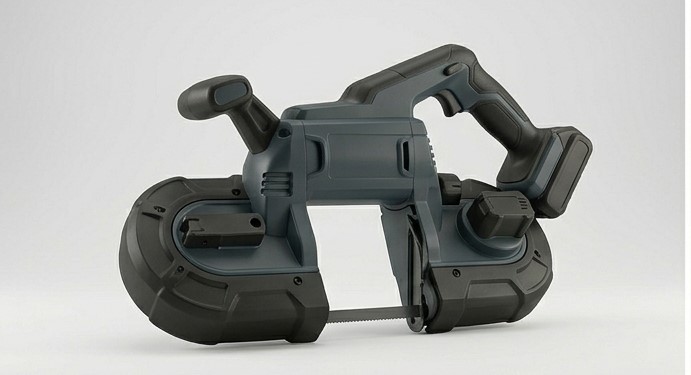
A cordless portable band saw uses battery power to cut metal pipes, conduit, rebar, and structural materials without relying on electrical outlets or cumbersome extension cords. These tools combine the precision of stationary band saws with complete job site mobility, enabling clean cuts in overhead positions, confined spaces, and remote locations. This guide examines essential cordless portable band saws available for trade professionals and DIY enthusiasts, explaining how to select equipment matching specific cutting applications and workflow requirements.
Table of Contents
What Is a Cordless Portable Band Saw?
A cordless portable band saw is a handheld power tool that uses a continuous loop blade driven by a battery-powered motor to cut through metal, pipe, conduit, plastic, and occasionally wood. Unlike reciprocating saws that use back-and-forth blade motion, band saws deliver smooth, consistent cutting action that produces cleaner cuts with less vibration and material distortion.
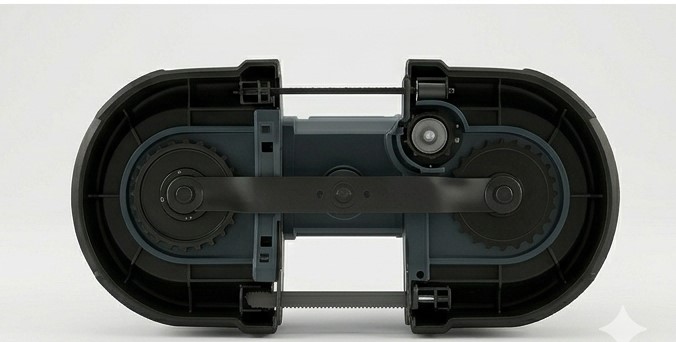
Core components include:
- Rechargeable lithium-ion battery pack powering the motor
- Brushless or brushed electric motor driving blade movement
- Continuous loop bi-metal or carbide blade
- Upper and lower blade guides maintaining cutting precision
- Blade tension adjustment mechanism
- Trigger with variable speed control
- Built-in LED work light for visibility in confined spaces
Cordless band saws prioritize mobility and convenience. While corded models offer unlimited runtime, battery-powered saws are designed for quick, medium-duty cutting. With advanced brushless motors and smart control systems, today’s cordless models maintain consistent speed under load and prevent overheating or motor strain, making them well-suited for tight spaces and field use where portability is essential.
The prices for cordless band saws have been coming down, making these tools more affordable than ever. Additionally, these tools are now rivaling the performance of their corded counterparts. With the expansion and development of lithium-ion battery technology, tools like band saws now have ample power and run-time on tap to handle heavy-duty use and abuse.
Going cordless has other advantages — like being able to go up a ladder or a lift. With no cords attached, this actually makes for a safer work environment by eliminating tripping hazards.
Trade professionals across multiple disciplines rely on cordless portable band saws as essential cutting tools. Electricians use them for conduit cutting, plumbers depend on them for pipe fitting, and metal fabricators employ them for trimming steel and aluminum components. Their lightweight design makes them equally practical for maintenance teams or mobile technicians needing dependable cutting performance without fixed power sources.
The distinction between full-size and compact cordless band saw models matters significantly for tool selection. Full-size models offer larger cutting capacities handling thicker materials and bigger pipe diameters, while compact models prioritize lightweight design and one-handed operation in confined spaces. Understanding which category serves primary cutting applications prevents purchasing tools with mismatched capabilities.
How Cordless Portable Band Saws Operate
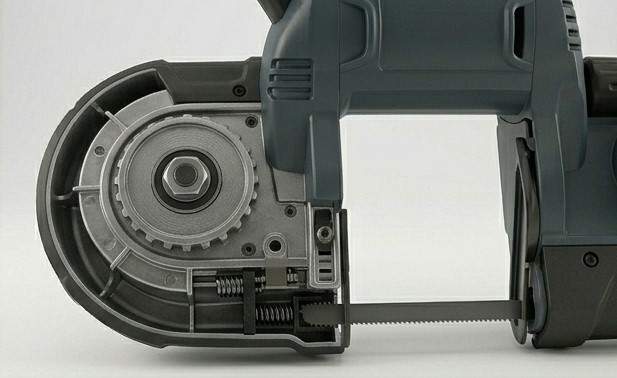
Understanding band saw mechanics helps users select appropriate models and optimize cutting performance across different materials and job site conditions.
Standard operational sequence:
- Charged battery inserts into saw handle or body housing
- Material positions within the blade throat area
- Trigger activation engages motor driving continuous blade loop
- Blade travels through upper and lower guide bearings maintaining alignment
- Variable speed control adjusts blade velocity for different materials
- LED work light activates simultaneously with motor for visibility
- Cut completes with minimal burr through consistent blade contact
Brushless motors represent the performance standard for quality cordless band saws. Thanks to brushless motor technology, these tools produce clean, precise cuts with minimal vibration, enhancing both accuracy and control during extended work sessions. These motors automatically adjust power delivery based on cutting resistance, maintaining consistent blade speed through varying material densities without requiring manual adjustments.
Surface Feet per Minute (SFPM or SFM) is an important term when dealing with band saws — it describes how fast the cutting edge of the tool travels. This measurement helps establish meaningful performance differences between products that might use the same blade style or teeth per inch (TPI). Higher SFPM ratings generally indicate faster cutting through standard materials, though optimal speeds vary based on material type and thickness.
Blade selection significantly impacts cutting quality and tool longevity. Bi-metal blades combining high-speed steel teeth with flexible alloy steel backing handle most metal cutting applications effectively. Carbide-tipped blades provide superior performance cutting hardened materials, stainless steel, and abrasive composites at higher cost per blade. Matching blade TPI to material thickness ensures clean cuts, with lower TPI suited for thicker materials and higher TPI producing finer cuts in thinner stock.
Cordless band saws include built-in safety features like blade guards, anti-follow-through bars, and trigger locks. Always wear protective eyewear, keep hands clear of the blade path, and inspect safety guards before operating. Following the manufacturer’s instructions helps maintain consistent tool performance and user safety.
Dual-trigger safety systems found on many professional models require simultaneous activation of two triggers before blades engage. This design prevents accidental startup when carrying or repositioning the saw, particularly important during overhead cutting where blade contact with unexpected surfaces creates injury risks.
Variable speed control enables material-specific cutting optimization. Slower speeds suit harder materials like stainless steel and thick iron pipe, reducing heat buildup and blade wear. Higher speeds handle softer materials including aluminum, copper, and PVC pipe more efficiently. Quality tools provide smooth speed gradation across their operating range rather than abrupt transitions between limited speed settings.
Cordless Portable Band Saw Provider Comparison
Major power tool manufacturers offer cordless band saws targeting different trade applications, cutting capacities, and budget considerations.
| Brand | Notable Model | Key Specifications | Ideal For |
|---|---|---|---|
| Milwaukee | M18 FUEL 2629-20 | 3.25″ cutting capacity, brushless motor, dual-trigger safety | Heavy-duty professional cutting |
| Milwaukee | M12 FUEL 2529-21XC | 2.5″ x 2.5″ capacity, compact 6.75 lbs, POWERSTATE motor | Confined spaces, electricians, plumbers |
| DeWalt | DCS374B 20V MAX | 5″ cutting capacity, brushless motor, solid runtime | Large diameter pipe and structural work |
| DeWalt | DCS377B Atomic | 1.75″ x 1.75″ capacity, 380 FPM, 6.6 lbs lightweight | Quick cuts, overhead work, one-handed use |
| Makita | XBP05ZB 18V LXT | Compact design, sub-compact battery compatible, professional grade | Precision metalwork, trade professionals |
| Ryobi | P590 18V ONE+ | 2.5″ capacity, lightweight build, LED worklight | Light-duty DIY and occasional trade use |
| Bosch | BSH180 18V | Variable speed, compact ergonomic design, overload protection | Versatile trade applications |
| WEN | 94396 10-Amp | 5″ cutting capacity, 10-amp motor, budget-friendly | Cost-conscious buyers, workshop use |
Milwaukee dominates professional cordless band saw applications through two distinct platform offerings. The M18 FUEL is considered compact, although it comes with dual handles — something not always available on compact models — which is appreciated for helping stabilize the tool while cutting. The larger M18 platform delivers 3.25-inch cutting capacity and the fastest cutting speeds among cordless alternatives. In EMT conduit testing, the big M18 Milwaukee band saw came in as the saw with the fastest cutting speed, taking just 1.9 seconds to make a single pass.
The Milwaukee M12 FUEL serves electricians and plumbers needing compact cutting capability in tight installation spaces. At just 12 inches long and less than 6.75 pounds, the subcompact Milwaukee M12 portable band saw is the smallest tool tested, yet its 1⅝-inch cut capacity is enough for many plumbers and electricians — built to the same standards as all Milwaukee tools. The M12 battery platform compatibility across dozens of Milwaukee products adds significant value for tradespeople already invested in this ecosystem.
DeWalt addresses both full-size and compact cutting needs through their 20V MAX platform. The DeWalt DCS374B is a standout cordless option, with its brushless motor offering solid runtime and a 5-inch cutting capacity making it adaptable for a wide range of applications. The larger cutting capacity suits structural steel, heavy conduit, and thick-walled pipe that smaller compact saws cannot accommodate.
DeWalt’s Atomic 20V Max cordless portable band saw weighs just 6.6 pounds, yet generates 380 FPM cutting speed — enough to cut through ⅝-inch rebar in 10 seconds, making it well-suited for cutting pipes, conduits, and more around the house or on the job. The blade lever release makes installing band blades easy, and the LED guide light illuminates a large working area. This compact model suits one-handed operation and overhead cutting tasks where lighter weight significantly reduces fatigue.
Makita provides professional-grade cordless band saws through their established 18V LXT battery platform. The XBP05ZB targets trade professionals requiring precision metalworking capability with compact dimensions enabling access to confined installation spaces. Makita’s reputation for motor quality and battery management technology translates into consistent cutting performance throughout battery discharge cycles.
Ryobi serves entry-level professional and serious DIY users through their 18V ONE+ battery platform. The Ryobi P590 is powered by Ryobi’s 18V ONE+ battery system, offering impressive mobility without sacrificing power. It has a 2.5-inch cutting capacity, making it suitable for cutting conduit, threaded rods, and even rebar. The integrated LED work light ensures visibility, and its lightweight build allows for prolonged use without fatigue.
Bosch offers the BSH180 through their 18V platform, emphasizing ergonomic design and versatility across trade applications. The Bosch BSH180 features variable speed control for material-specific applications, brushless motors for longer tool life and reduced maintenance, built-in LED lights for visibility in low-light areas, overload protection to prevent damage during heavy use, and compact construction ideal for overhead and tight-space cutting.
WEN targets budget-conscious buyers and workshop users through their corded and affordable cordless options. The WEN 94396 offers a surprising amount of value for its price point. Powered by a 10-amp motor and capable of cutting material up to 5 inches wide and deep, this saw is ideal for users needing flexibility across different cutting tasks. The accessible pricing makes this option attractive for users performing occasional cutting tasks without requiring daily professional-grade reliability.
Benefits of Cordless Portable Band Saws
Complete job site mobility: Battery power eliminates outlet dependency that restricts corded band saw positioning. Tradespeople working in mechanical rooms, above ceilings, or on elevated platforms access cutting capability without extension cord management. This mobility proves particularly valuable during installation work where cutting locations shift constantly throughout project completion.
Safer overhead and elevated cutting: Going cordless eliminates a tripping hazard by eliminating the cord, making for a safer work environment — especially when going up a ladder or a lift. Removing extension cord hazards from elevated work environments reduces fall and trip risks that overhead cutting with corded equipment creates.
Cleaner cuts than reciprocating saws: Continuous blade motion produces smoother, more precise cuts compared to reciprocating saw blade action. The consistent cutting direction reduces material distortion, minimizes burrs requiring post-cut finishing, and maintains tighter dimensional tolerances important for fitting pipe connections and conduit installations.
Reduced vibration and fatigue: Band saw cutting mechanics transmit substantially less vibration to operator hands and arms compared to reciprocating saws during extended cutting sessions. This reduced vibration decreases fatigue during high-volume cutting tasks and lowers long-term hand-arm vibration exposure risks for professional tradespeople.
Compact size enabling confined space access: The compact size of a cordless band saw offers maneuverability that traditional stationary models lack, allowing working anywhere without requiring an energy source and enabling use for overhead tasks. Tight utility rooms, equipment closets, and crowded mechanical spaces become accessible with compact portable band saw designs.
Material versatility across trade applications: Single cordless band saws handle conduit, threaded rod, pipe, rebar, angle iron, fence posts, and aluminum structural components. This versatility eliminates carrying multiple specialized cutting tools, reducing job site tool inventory while maintaining cutting capability across diverse material requirements.
Battery platform integration: Most cordless band saws integrate into manufacturer battery ecosystems powering multiple tool types. Tradespeople with existing Milwaukee, DeWalt, or Makita battery investments add band saw capability without purchasing duplicate batteries, maximizing value across complete tool collections.
Drawbacks and Considerations for Cordless Portable Band Saws
Higher upfront cost compared to corded alternatives: Prices for portable saws range between $110 for basic models and $849 for powerful cordless variants. Premium cordless models command significant premiums over comparable corded alternatives, with professional-grade Milwaukee M18 kits approaching $500-600 including batteries. This investment requires justification through mobility benefits that corded tools cannot provide.
Limited runtime for high-volume cutting: Battery capacity constrains continuous cutting sessions, with runtime varying based on material hardness, cut frequency, and battery capacity. Tradespeople performing dozens of cuts per session benefit from additional battery inventory enabling continuous workflow without charging interruptions.
Reduced cutting capacity in compact models: The smallest cordless band saws sacrifice cutting throat dimensions for reduced size and weight. The M12’s cutting capacity wasn’t large enough to handle some of the bigger pipes that could be cut with larger models. Tradespeople cutting larger diameter pipe or structural materials regularly require full-size models despite their additional weight.
Battery weight affecting balance: Battery packs add meaningful weight to tool handling, particularly for overhead or one-handed cutting applications. Some full-size models don’t have a second handle for stability and accuracy while in use. Users should evaluate balance characteristics during extended cutting sessions before committing to specific models.
Blade replacement and ongoing costs: Continuous loop blades wear through regular use and require periodic replacement. Quality bi-metal blades suitable for professional use typically cost $10-25 each, with carbide-tipped options for hardened materials reaching $30-50. High-volume cutting operations generate meaningful ongoing blade expenses beyond initial tool investment.
Cold weather battery performance: Lithium-ion battery capacity and power output reduce in cold temperatures affecting performance during winter job site conditions. Professional tradespeople working in unheated spaces during cold months benefit from battery warming strategies and spare battery inventory maintaining workflow consistency.
Blade changing complexity on some models: Replacing continuous loop blades requires releasing blade tension, removing guards, routing new blades through guide bearings, and re-tensioning properly. Tool-free blade change systems on premium models simplify this process, while budget models require additional tools and time during blade replacement.
Pricing Overview for Cordless Portable Band Saws
Cordless portable band saw costs vary based on voltage, cutting capacity, brand positioning, and kit configuration.
Entry-level compact models range from $100-200 for bare tool pricing without batteries. These options suit occasional DIY use and light trade applications where professional-grade reliability isn’t essential. Budget models from brands like Ryobi and WEN provide adequate performance for intermittent cutting without significant investment.
Mid-range professional models occupy the $200-350 bare tool price range for established brand options with brushless motors and solid battery platforms. DeWalt Atomic and Bosch BSH180 fall within this category, delivering professional-grade performance accessible to smaller contractors and serious DIY users comfortable with tool investment.
Premium professional models command $350-500 for bare tool configurations from Milwaukee M18 FUEL and comparable platforms. These tools deliver maximum cutting speed, highest reliability standards, and comprehensive warranty coverage justifying premium investment for daily professional use. Performance testing consistently shows these tools outperforming lower-priced alternatives in cutting speed and long-term durability.
Complete kit pricing adds $150-300 to bare tool costs through included battery and charger combinations. Kit configurations benefit buyers establishing new battery platforms without existing compatible batteries. The convenience of immediate operation upon purchase often justifies kit pricing for new platform adopters.
Battery ecosystem investment represents the most significant cost consideration for platform selection. Choosing a brand’s cordless band saw based primarily on battery compatibility with existing tools avoids duplicate battery investment. A DeWalt tradesperson adding an M18 Milwaukee band saw faces additional battery and charger purchases essentially doubling effective tool cost.
Replacement blade costs accumulate meaningfully for high-volume cutting operations. Professional bi-metal blades handling most conduit and pipe cutting last hundreds of cuts under proper operating conditions. Tracking blade replacement frequency and cost enables accurate total ownership cost calculations beyond initial purchase price comparisons.
Warranty coverage varies from one to five years depending on brand and registration requirements. Milwaukee’s five-year warranty on FUEL series tools represents industry-leading coverage demonstrating manufacturer confidence in product durability. Extended warranty coverage reduces long-term ownership risk for tools experiencing daily professional use and occasional job site abuse.
Frequently Asked Questions
What materials can cordless portable band saws cut? Cordless band saws cut metal pipes, conduit, rebar, angle iron, threaded rod, copper and aluminum tubing, PVC and ABS plastic pipe, fence posts, and iron railings. Some models handle light structural steel and sheet metal. Blade selection significantly affects material compatibility, with bi-metal blades handling most common trade materials effectively.
How does cutting capacity affect model selection? Cutting capacity describes the maximum material dimensions fitting within the blade throat. Common compact models handle approximately 1.75-2.5 inch capacity while full-size models reach 3.25-5 inches. Match cutting capacity to your most frequent material sizes, ensuring occasional larger cutting needs don’t require additional tool purchases.
What is Surface Feet per Minute and why does it matter? Surface Feet per Minute describes blade cutting speed during operation. Higher SFPM ratings indicate faster material cutting, though optimal speed varies by material type. Softer materials cut efficiently at higher speeds while harder materials like stainless steel benefit from slower cutting reducing heat buildup and blade wear.
How long do cordless band saw batteries typically last per charge? Runtime varies significantly based on material hardness, cut frequency, and battery capacity. Cutting 1.5-inch EMT conduit, a 5.0Ah battery provides approximately 50-100 individual cuts depending on model efficiency. Hard materials like structural steel reduce runtime substantially. Professional tradespeople performing high-volume cutting maintain multiple charged batteries rotating throughout work sessions.
Are compact or full-size cordless band saws better for electricians? Compact models suit most electrical trade cutting including conduit, wire mesh, and threaded rod. The smaller dimensions enable one-handed operation in panel rooms, above drop ceilings, and in confined equipment spaces. Full-size models become necessary when cutting large-diameter conduit exceeding compact model cutting capacity.
Can cordless band saws replace reciprocating saws on job sites? For clean precision cuts in pipe and conduit, band saws outperform reciprocating saws through smoother cutting action and reduced material distortion. However, reciprocating saws handle demolition work, nail-embedded wood, and asymmetrical cutting tasks where band saw throat dimensions prevent blade engagement. Most professionals carry both tools for different applications.
What blade TPI should I use for different materials? Use 14-18 TPI for thin-walled pipe and conduit under 1/4 inch thick. Medium materials between 1/4 and 1/2 inch thick cut well with 10-14 TPI blades. Thicker materials above 1/2 inch benefit from 6-10 TPI blades removing more material per blade pass. Variable pitch blades spanning multiple TPI ranges handle diverse materials without blade changes.
How do I maintain a cordless portable band saw? Clean the blade housing after every use to remove debris. Check blade tension and alignment routinely. Store and charge batteries properly to extend lifespan. Replace dull or worn blades to maintain clean cutting. Inspect guards and housing for cracks or damage before each job. Regular blade inspection prevents motor damage from broken teeth becoming lodged in blade guides.
Conclusion
Cordless portable band saws have evolved from convenience alternatives into primary cutting tools for trade professionals across electrical, plumbing, and metal fabrication work. Battery technology advances delivering consistent cutting speeds throughout discharge cycles, brushless motor efficiency enabling extended runtime, and compact designs accessing previously unreachable cutting locations have collectively transformed these tools into job site essentials.
Selecting appropriate cordless band saws requires honestly evaluating primary cutting applications, material sizes encountered regularly, existing battery ecosystem investments, and budget constraints. Electricians and plumbers performing primarily conduit and standard pipe work manage effectively with compact Milwaukee M12 or DeWalt Atomic models. Heavy-duty contractors cutting large-diameter pipe and structural materials justify full-size M18 FUEL or DeWalt DCS374B investments. Budget-conscious buyers or occasional users find adequate capability through Ryobi P590 or WEN options at significantly lower price points.
The ongoing performance convergence between cordless and corded band saws continues narrowing the remaining capability gap. Cutting speed tests demonstrate Milwaukee M18 FUEL performance approaching corded alternatives while maintaining complete battery mobility. This trajectory suggests future cordless band saws will further minimize compromises currently separating battery and corded performance for demanding professional applications.
For professionals ready to transition from corded or reciprocating saw cutting toward dedicated portable band saw capability, understanding voltage requirements, cutting capacity needs, and battery platform compatibility enables confident purchasing decisions. The investment in quality cordless portable band saws delivers immediate workflow improvements through mobility, cleaner cuts, and reduced fatigue that alternative cutting tools cannot match across the range of trade applications these tools serve.