
Beat the heat home appliances help you stay cool indoors without relying on a single, expensive cooling system. This guide helps you find the right appliance for your space and budget.
Table of Contents
What Are Heat-Beating Home Appliances?
Heat-beating home appliances are devices built to manage indoor temperature and air quality during periods of high heat. The category covers a broad range of products — from window air conditioners and split AC systems to tower fans, evaporative coolers, and smart multi-function devices.
These appliances work by either removing heat from the air, circulating cooled air throughout a space, or creating a perceived cooling effect on the body. The type you choose depends on factors like room size, climate, noise tolerance, and how much you want to spend both upfront and on your monthly electricity bill.
With summer temperatures rising and energy costs a growing concern for many households, the market for home cooling solutions has expanded significantly. Consumers now have more choices than ever, ranging from budget-friendly portable fans to premium smart appliances that double as air purifiers.
Understanding what each appliance does — and what it does not do — is the first step toward making a smart purchase. This guide walks you through each major category, how they work, who makes them, and what you can expect to pay.
How Do Cooling Appliances Work?
Cooling appliances use several different methods to reduce heat indoors. Knowing the science behind each method helps you match the right product to your environment.
Refrigerant-based cooling
Air conditioners — whether window units, portable, or split systems — use a chemical refrigerant that absorbs heat from indoor air and releases it outdoors. A compressor circulates the refrigerant between two sets of coils. The indoor coil absorbs heat; the outdoor coil releases it. This is the most powerful and reliable method of cooling, especially in humid climates where other methods fall short.
The main downside is energy consumption. A standard window AC unit draws significantly more power than a fan or evaporative cooler. However, modern inverter-based compressors — found in many split AC systems — adjust their speed based on demand, which can cut energy use by up to 30% compared to older fixed-speed models.
Evaporative cooling
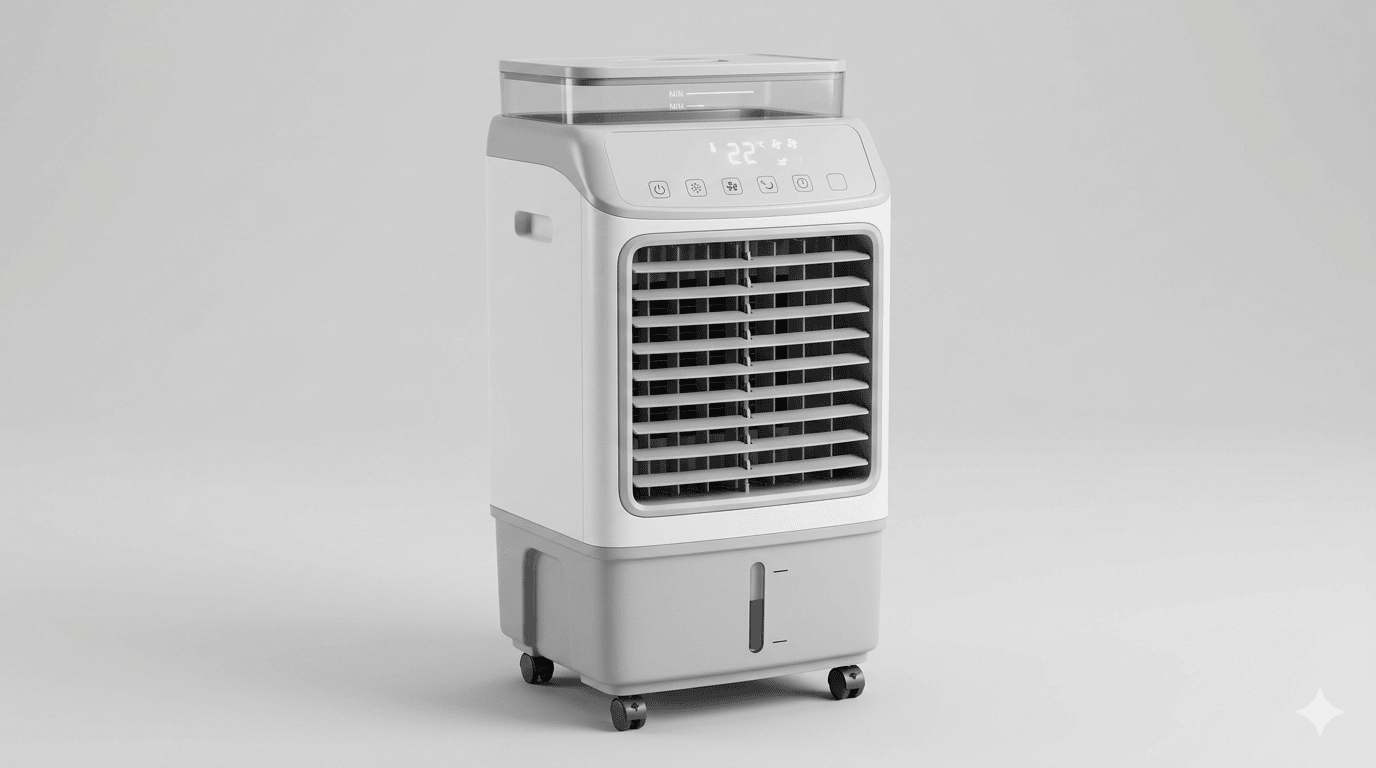
Evaporative coolers, sometimes called swamp coolers, pass warm air over water-saturated pads. As the water evaporates, it absorbs heat from the air and lowers its temperature. This process is similar to what happens when sweat evaporates from your skin on a breezy day.
Evaporative cooling is highly energy-efficient and costs a fraction of what a standard AC unit consumes. However, it adds moisture to the air. In dry climates, this is a benefit. In already-humid conditions, it can make a room feel more uncomfortable rather than less. Always check your local humidity levels before investing in an evaporative cooler.
Air circulation and airflow
Tower fans, ceiling fans, and pedestal fans do not actually lower room temperature. What they do is move air across your skin, which speeds up sweat evaporation and creates a cooling sensation. This effect can make a room feel several degrees cooler even without changing the actual air temperature.
Fans are most effective when used alongside an air conditioner. By distributing cool air more evenly across the room, a fan allows the AC to run at a lower setting — saving energy while maintaining comfort. Some high-end fans, such as those from Dyson, use bladeless Air Multiplier technology to project smooth, uninterrupted airflow and can also filter airborne particles.
Smart and multi-function appliances
A newer category of smart cooling appliances combines multiple functions in a single unit. These devices may act as a fan, air purifier, heater, and humidifier all at once. They are controlled via smartphone apps, respond to voice commands, and can be programmed to adjust settings based on time of day or room conditions. While they carry a higher upfront cost, they reduce the need to buy separate appliances for each function.
Practical tip: Pairing a ceiling fan with an air conditioner and setting the AC two to three degrees higher can deliver the same comfort level at a noticeably lower electricity cost.
Appliance Comparison
The table below compares major home cooling appliance categories across key decision factors. All brands listed are linked to their official homepages for easy reference.
| Appliance Type | Brand | Cooling Method | Ideal Room Size | Est. Price Range | Energy Use | Installation |
|---|---|---|---|---|---|---|
| Window AC Unit | LG | Refrigerant | Up to 550 sq ft | $200 – $600 | High | Moderate (window mount) |
| Portable AC | Midea | Refrigerant + vent hose | Up to 400 sq ft | $300 – $700 | Medium-High | Easy (no tools needed) |
| Tower Fan | Honeywell | Air circulation | Up to 300 sq ft | $40 – $150 | Very Low | None |
| Bladeless Fan + Purifier | Dyson | Air Multiplier™ | Up to 400 sq ft | $400 – $800 | Low | None |
| Evaporative Cooler | Dreo | Water evaporation | Up to 250 sq ft | $60 – $250 | Low | None |
| Split AC System | Voltas | Refrigerant (ductless) | Up to 700 sq ft | $500 – $1,500 | Medium | Professional required |
| Ceiling Fan | Usha | Air circulation | Up to 400 sq ft | $30 – $200 | Very Low | Electrical wiring needed |
| Inverter Split AC | Daikin | Inverter compressor | Up to 800 sq ft | $700 – $2,000 | Medium-Low | Professional required |
Key Features To Look for in a Cooling Appliance
Not all appliances within the same category are created equal. Several features can significantly affect comfort, convenience, and running costs.
Energy efficiency rating
Energy efficiency is one of the most important factors to evaluate before purchasing. Air conditioners are rated using an Energy Efficiency Ratio (EER) or Seasonal Energy Efficiency Ratio (SEER). A higher number means more cooling per unit of electricity consumed. Inverter-based systems from brands like Daikin consistently score well on efficiency ratings because the compressor adjusts its speed rather than cycling fully on and off.
For fans and evaporative coolers, look at the wattage. A tower fan that draws 45 watts will cost far less to run daily than one drawing 80 watts, even if both produce similar airflow at standard settings.
Noise levels
Noise output matters especially in bedrooms and home offices. Many modern tower fans now operate at 28–35 decibels on their lowest settings — roughly the level of a quiet library. Portable air conditioners tend to be louder, typically ranging from 50 to 60 decibels. If noise is a concern, look for appliances that specifically list a sleep or quiet mode, such as models from Honeywell with their QuietSet technology.
Room coverage area
Every cooling appliance is rated for a specific square footage. Buying an appliance that is too small for your room means it will struggle to maintain a comfortable temperature, running longer and consuming more energy in the process. Always match the appliance’s coverage rating to your actual room size and account for factors like ceiling height, direct sunlight, and insulation quality.
Smart controls and connectivity
Wi-Fi connectivity and app control allow you to adjust settings remotely, set schedules, and monitor energy use from your phone. This is particularly useful for managing cooling in advance — cooling a room before you arrive home rather than running it all day. Brands like LG and Dyson offer app-connected models with detailed usage data and voice assistant compatibility.
Air filtration
Some cooling appliances include built-in air filtration. This is especially valuable in urban environments or for households with allergy sufferers. Dyson‘s purifier fan range captures particles as small as 0.1 microns, removing dust, pollen, and other airborne pollutants while keeping the room cool. Standalone air purifiers can also be paired with any cooling system to achieve similar results.
Benefits and Drawbacks of Home Cooling Appliances
Every type of cooling appliance has specific strengths and limitations. Understanding these helps you avoid a purchase that does not match your actual situation.
Benefits
- Air conditioners provide consistent cooling in all humidity levels
- Tower fans are affordable, quiet, and extremely energy-efficient
- Evaporative coolers add moisture to dry indoor air
- Portable units require no permanent installation
- Smart appliances reduce waste through automated scheduling
- Ceiling fans work silently and use minimal electricity
- Inverter AC systems cut energy bills with variable-speed compressors
- Multi-function devices replace multiple appliances with one unit
Drawbacks
- Window and split AC units need professional installation
- Evaporative coolers are ineffective in high-humidity climates
- Fans alone do not reduce actual air temperature
- Premium brands like Dyson carry a high upfront cost
- Portable AC units require window venting, limiting placement
- Split systems involve significant installation and maintenance costs
- Evaporative coolers need regular water refills and pad replacement
- High-capacity window units can be heavy and difficult to install alone
How To Choose the Right Appliance for Your Home
Selecting the right home cooling appliance comes down to matching the device to your specific living situation. There is no single option that works for every household.
For small apartments and single rooms
If you are cooling a bedroom or small living area under 300 square feet, a tower fan or evaporative cooler will likely be sufficient in a dry climate. These are the most affordable options to buy and run. A fan from Honeywell or an evaporative cooler from Dreo provides a comfortable environment at a low operating cost.
For humid climates or very hot conditions, a portable air conditioner from Midea offers effective cooling with no permanent installation required. These are especially practical for renters who cannot modify their home.
For medium to large rooms
Rooms between 300 and 600 square feet benefit most from a window AC unit or an inverter split system. A window unit from LG delivers powerful, consistent cooling. For a more permanent and quieter solution, a ductless split system from Voltas or Daikin is worth the higher investment.
For whole-home comfort
If you want to cool multiple rooms efficiently, combining a split AC system with ceiling fans in each room is a proven strategy. The ceiling fans help distribute conditioned air, allowing the AC to run at a less aggressive setting. Usha offers a range of ceiling fans suited to various room sizes and ceiling heights.
Pricing Overview
Cooling appliance costs span a wide range. Here is a practical summary of what to expect at each price level.
Budget (fans, basic coolers)
$30 – $150
Mid-range (portable AC, evap coolers)
$150 – $600
Premium (split AC, smart fans)
$600 – $2,000+
Entry-level options include tower fans from Honeywell starting around $40 and evaporative coolers from Dreo between $60 and $250. These work well as supplemental cooling in mild conditions or small spaces.
Mid-range buyers can look at portable air conditioners from Midea in the $300–$700 range, or window units from LG between $200 and $600. These are strong all-around choices for consistent cooling in a single room.
Premium products include bladeless fan-purifier combos from Dyson ranging from $400 to $800, split AC systems from Voltas at $500 to $1,500, and inverter systems from Daikin reaching up to $2,000 before installation. These deliver long-term value, energy savings, and added comfort features that justify the higher price for frequent users.
Running costs are equally important. A tower fan costs just a few cents per hour to operate. A standard window AC unit can add $30–$80 to a monthly electricity bill depending on usage, room size, and local energy rates. Inverter-based systems reduce this significantly by adjusting power output to match the actual cooling demand rather than running at full capacity all the time.
When calculating total cost of ownership, factor in maintenance as well. Evaporative coolers require periodic water pad replacement, typically every season. Split AC systems need annual servicing to maintain efficiency. Filters in air purifier fans should be replaced every 6 to 12 months.
Conclusion
Choosing the right home cooling appliance is a practical decision that depends on your climate, room size, budget, and how often you plan to use it. Fans and evaporative coolers offer low-cost relief for mild heat. Portable and window air conditioners provide stronger, more reliable cooling for humid or very warm conditions. Split AC systems with inverter technology are the most efficient long-term investment for households in consistently hot climates.
The appliance market now includes options for every budget and living situation. Whether you choose a simple tower fan from Honeywell, a portable unit from Midea, or a premium smart system from Dyson or Daikin, what matters most is matching the appliance to your actual needs. Take time to compare energy ratings, room coverage, and installation requirements before you buy — and you will make a choice that keeps your home comfortable without unnecessary cost.